Small Bottles, Big Markup: The Real Math Behind Travel-Size Skincare
There's a particular kind of temptation that lives at the end of the drugstore checkout line: a tiny jar of moisturizer, a thumb-sized cleanser, a cleanser so small it fits in your palm. It's cute. It's convenient. And if you do the math, it's often one of the worst deals in beauty.
Travel-size skincare has quietly become a billion-dollar corner of the industry, and the business model depends on one thing — most of us never compare the price per ounce. Once you start, it's hard to unsee.
The Per-Ounce Reality Check
Grab any mini from a major US retailer and compare it to its full-size sibling. A 1-ounce cleanser that retails for $9 next to a 6-ounce full size at $18 is a 400% markup per ounce. This isn't a rare exception; it's closer to the rule. Industry analyses routinely show travel sizes costing two to four times more per ounce than standard packaging.
Why? Packaging, not product. The formula inside costs the same to produce whether it's in a big tube or a small one. But that miniature pump, that sealed jar, that branded cap — small-format packaging is disproportionately expensive to manufacture, and brands pass that along. You're essentially paying a premium for less plastic that you'll throw away faster.
There's a hidden environmental line item, too. Smaller containers mean more packaging per use, more shipping weight per ounce of product, and more tiny tubes headed to landfills. For a site built on the idea that less can be more, that math doesn't sit well.
When Minis Actually Make Sense
None of this means travel sizes are always a trap. There are a few legitimate reasons to reach for one:
- Testing a new formula. A two-week trial size is a smarter bet than committing to a full bottle of something your skin might reject.
- Carry-on-only trips. If you're flying with a carry-on, you need to comply with the TSA 3-1-1 rule: liquids and gels in containers of 3.4 ounces (100 ml) or less, all fitting in one quart-size bag.
- Gym bags and desk drawers. Products that live outside your bathroom don't need to be economical — they need to be there.
The problem isn't minis. It's buying minis out of habit, trip after trip, without noticing you're paying triple for the same cleanser.
Decant, Don't Duplicate
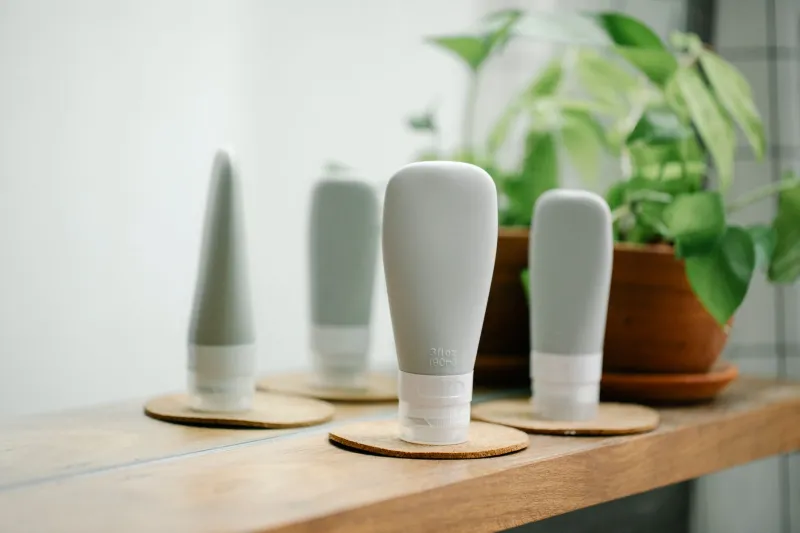
The cleanest solution for most of your routine is a set of refillable travel containers. Silicone squeeze tubes and small glass or PET bottles — widely available for under $15 for a full set — let you bring exactly what you already use and love.
A few decanting tips worth knowing:
- Match the container to the formula. Thin serums and toners do fine in small squeeze bottles. Thicker creams need jars or wide-mouth tubes. Pumps are nice but tend to waste the last bit of product.
- Label everything. A Sharpie or small labels save you from mistaking toner for micellar water in a dim hotel bathroom.
- Decant serums with care. Anything with unstable actives — think vitamin C or retinoids — does better in opaque, airtight containers, and only for short trips. Light and air degrade them fast.
- Sanitize first. Wash and fully dry containers between uses. A damp bottle is a petri dish waiting to happen.
Six Products Worth Buying Mini — and Four That Aren't
Some products genuinely earn their travel-size price tag. Others should never leave your bathroom in mini form.
Worth the mini:
- Retinoids and prescription treatments. You use a pea-sized amount anyway, and minis of these often cost only slightly more per ounce than full sizes.
- Eye cream. The tubes are tiny to begin with; the markup is minimal.
- Spot treatments. You need a few drops, not a full bottle.
- Sunscreen sticks and solid SPF. These are TSA-exempt as solids and perfect for reapplying on the go.
- Face oils. A 5 ml rollerball lasts a two-week trip easily.
- Sheet masks and single-dose packets. No decanting risk, no spoilage, zero waste anxiety.
Skip the mini:
- Cleanser. Your highest-usage product, and the one with the worst markup. Decant it.
- Body lotion. You'll burn through a mini in two showers. Full size in a checked bag, or a solid lotion bar instead.
- Toner. Heavy liquid use, easy to decant into a small spray or squeeze bottle.
- Shampoo and conditioner. Hotel bottles exist; so do solid bars, which sidestep TSA entirely.
Solid Swaps That Change the Game
If you want to simplify packing altogether, the fastest route is going solid. Shampoo bars, cleansing balms in tins, stick sunscreens, and solid moisturizers don't count toward your liquid allowance, can't leak in your bag, and typically last longer per ounce than their liquid counterparts. For a clean-ingredient routine, bars also tend to come with shorter preservative lists, since they don't need the same water-based preservation system.
A quart bag packed with solids and two or three decanted liquids can cover a full routine — cleanse, treat, moisturize, protect — for a week or more.
The Bottom Line
Travel-size skincare isn't evil; it's just expensive per ounce, and it works best as a targeted tool rather than a default. Buy minis for the products you use sparingly or want to test. Decant everything else into refillable containers you'll reuse for years. Lean on solid formats where you can.
Your skin doesn't know what size bottle it came from. Your wallet and your carry-on will both thank you for remembering that.