Thirty Days, Two Bottles: The Experiment That Made My Bathroom Shelf Look Empty
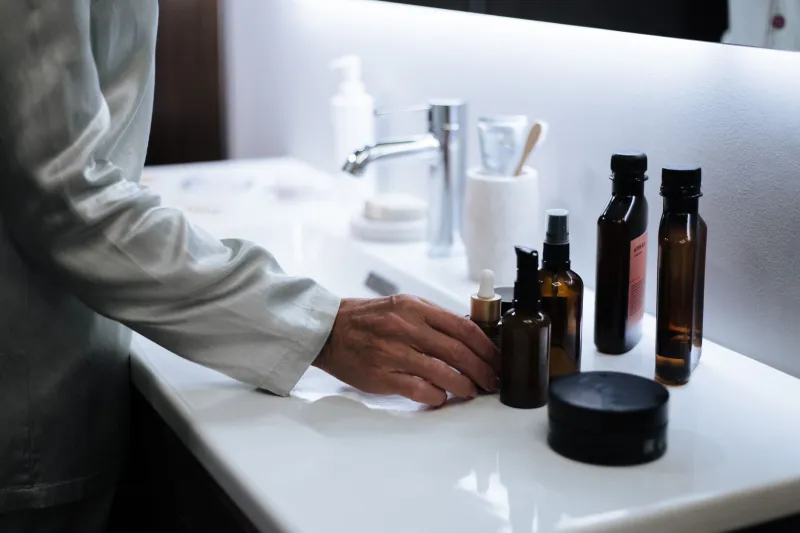
There's a moment of honesty that happens when you pull everything out of your medicine cabinet and line it up on the counter. Cleansers you forgot about. Three moisturizers doing roughly the same job. A serum you bought after a late-night scroll and used exactly twice.
For most American bathroom shelves, that lineup tells the same story: we're not under-moisturized, we're over-stocked.
So we ran an experiment. For 30 days, a group of Blanco Care readers — plus input from two board-certified dermatologists — stripped their routines down to just two products. Two. Total. The findings were humbling, in the best way.
The Problem With a Ten-Step Life
The American skincare market has quietly trained us to believe that more steps equal more results. But skin doesn't work like a checklist. It has a limited capacity to absorb actives, and layering too many products often creates friction instead of synergy — irritation, clogged pores, and that vague redness nobody can trace to a single culprit.
Dr. Maya Ellison, a dermatologist we consulted for this piece, put it plainly: "If I could get patients to do one thing, it would be to stop stacking five products that all promise the same thing. Redundancy is the most common problem I see."
In other words, your hydrating serum, your hydrating toner, and your hydrating moisturizer aren't a routine. They're one job performed three times.
How the Two-Product Trial Worked
We asked 14 readers to choose exactly two products and commit to them — morning and night, nothing else — for four full weeks. No new launches. No backup serums "just in case." If a product ran out, the experiment ended there too.
The rules were simple:
- One product had to cleanse or hydrate
- The second had to address their single biggest skin concern
- Sunscreen was allowed (and encouraged) as a non-negotiable third, since no dermatologist we spoke to would sign off on a month without SPF
By week two, the reports coming in were surprisingly consistent. Twelve of the 14 participants said their skin looked calmer. Nine said they'd skip their usual midweek "treat myself" purchase. One reader, a 34-year-old from Ohio, wrote: "My skin stopped being angry at me. Turns out I was the problem."
Not Everyone Glowed — And That's the Point
We want to be honest here: two participants saw breakouts return, likely because they'd dropped a targeted acne treatment in favor of a gentler hydrator. Another reader with rosacea found the stripped-back routine too minimal during a dry Midwest winter.
That's the catch with radical simplicity — it works brilliantly until your skin has a specific, ongoing need. The lesson isn't that two products are magic. It's that most of the other eight were doing nothing at all, and cutting them costs you nothing.
Choosing Your Two: A Simple Decision Framework
If you want to try this yourself, don't grab your two favorites at random. Work through these questions instead.
First, what does your skin complain about most? Dryness, breakouts, dullness, sensitivity — pick one. Not three. One. Your second product slot belongs to that concern.
Second, which product have you actually finished? An empty bottle is the most honest review in your cabinet. Products you've used to the bottom tend to be the ones that genuinely suit your skin.
Third, does the ingredient list earn its length? A short, legible formula — think a gentle cleanser with a handful of recognizable ingredients — usually beats a 40-ingredient hybrid trying to be everything at once.
Fourth, would you repurchase it at full price? Not on sale, not with a gift card. Full price. That question filters out a remarkable amount of shelf clutter.
Once you've answered honestly, you'll usually land on something like a solid cleanser and one hardworking treatment or moisturizer. Boring? A little. Effective? The trial says yes.
What to Do With the Rest of the Shelf
Don't toss it. Skin can change with seasons, hormones, and stress, and that hydrating mask might earn its way back in January. Store the overflow in a cool, dark drawer and check expiration dates — most opened products have a shelf life of six to twelve months, so anything ancient should probably go regardless.
The real shift isn't the products you remove. It's the habit you build: buying with intention instead of impulse, and letting your skin tell you what it needs rather than an algorithm.
Thirty days. Two bottles. One surprisingly calm face. That's an experiment worth running.