Shower Steam Is Ruining Your Retinol: The Case for Evicting Your Skincare From the Bathroom
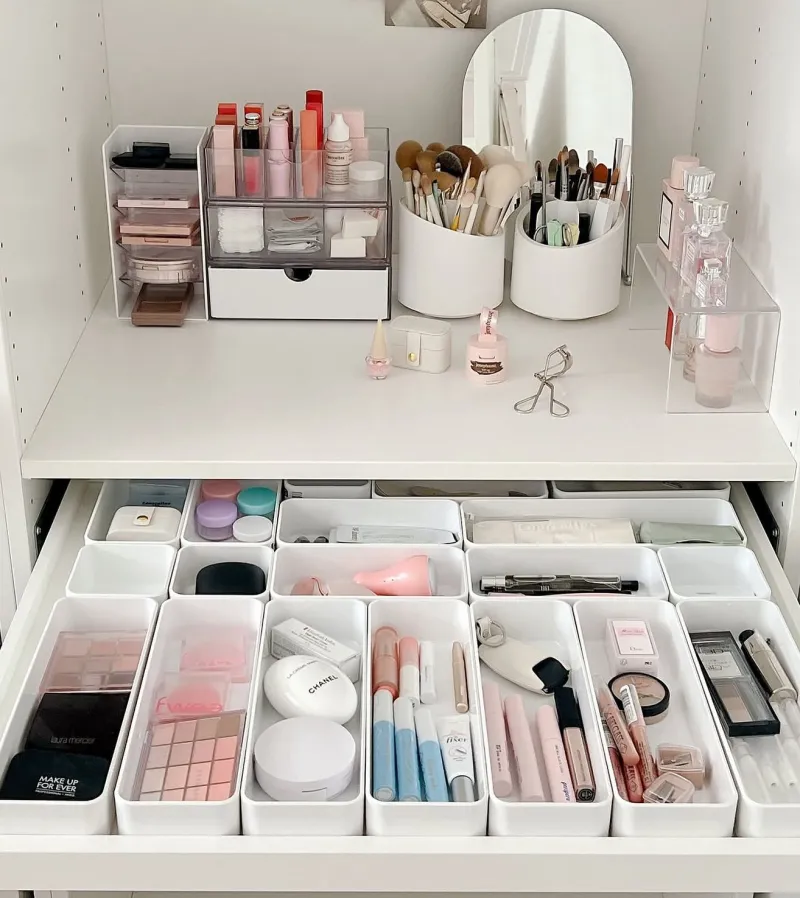
Photo: skincare bottles stored in a wooden drawer cool dark bedroom minimal, via i.pinimg.com
You spent $38 on a vitamin C serum. You read the reviews, checked the ingredient list, maybe even looked up the concentration. And then you put it on the shelf inside your medicine cabinet — directly above a sink where it endures a hot shower every morning.
That last part might be undoing everything else.
The Bathroom Is a Sauna, Technically
Formulators design skincare to survive a certain range of conditions. Your bathroom routinely exceeds them. Every hot shower pushes the room into the 90s Fahrenheit with humidity climbing past 70%. Over a year, that's thousands of hours of thermal cycling — warm, then cool, then warm again — which is precisely the kind of stress that breaks down unstable ingredients.
Retinol is notoriously fragile. So is vitamin C, especially the pure L-ascorbic acid kind beloved for brightening. Peptides, certain antioxidants, and even some preservative systems degrade faster when repeatedly heated and exposed to moisture. The result isn't usually dramatic: it's a slow fade of potency. Your serum doesn't spoil so much as quietly stop working as well as it did in week one.
Light Is the Other Offender
Clear glass bottles look gorgeous on a shelf, and that's the problem. UV and even strong visible light accelerate oxidation — the same process that turns a sliced apple brown. If your vitamin C serum has darkened from pale gold to amber or orange, it's already oxidizing. Some tinted formulas are designed to change color as a built-in warning; many are not.
This is why dermatologists often recommend opaque packaging and why the most expensive serums ship in dark glass. If you decant or toss the carton, you may be tossing the light protection along with it.
The Cheapest Upgrade You Can Make
Here's the good news: relocating your skincare costs nothing and takes about two minutes.
- A bedroom drawer or dresser top beats a bathroom shelf almost every time. Bedrooms stay cooler, drier, and darker.
- Keep the cartons for light-sensitive products, or store them in a lidded box.
- The fridge is optional, not mandatory. It's genuinely useful for certain formulas — some vitamin C serums, eye gels, and anything preservative-light — but it's not magic. A cool, stable drawer accomplishes most of the same work.
- Keep only daily-use items in the bathroom. Cleanser and SPF are fine near the sink; they're formulated to be hardier and you'll use them before they degrade.
Think of it like wine. Nobody keeps a good bottle on a sunny windowsill above the stove. Skincare deserves the same courtesy.
How to Tell a Product Has Already Turned
Even with perfect future habits, check what you own now. Warning signs:
- Color shift: A vitamin C serum that's gone deep orange or brown is done.
- Separation: If it won't re-mix with a shake, emulsions can break down.
- Smell: A rancid, sour, or suddenly waxy odor means oils have oxidized.
- Texture changes: Gritty lumps in a once-smooth serum or a watery cream suggest instability.
- Time: If the period-after-opening symbol says 6M and you opened it eight months ago, believe the jar.
When in doubt, retire it. Degraded actives aren't just ineffective — oxidized formulas can occasionally irritate.
A Simple Audit, This Weekend
- Pull everything off the bathroom shelf and out of the cabinet.
- Toss anything expired, discolored, or unrecognizable.
- Move serums, retinoids, and anything in clear packaging to a cool, dark spot outside the bathroom.
- Leave cleanser, SPF, and your daily moisturizer by the sink.
- Note the open dates on the products you keep.
That's it. No new purchases, no elaborate system. You've just extended the lifespan of every active formula you own — which, depending on your shelf, may be the most cost-effective skincare decision you make all year. Sometimes the best routine tweak isn't a new product. It's a better address for the ones you already have.