Sharing a Shelf With Your Allergy Pills: The Case for a One-Evening Bathroom Storage Audit
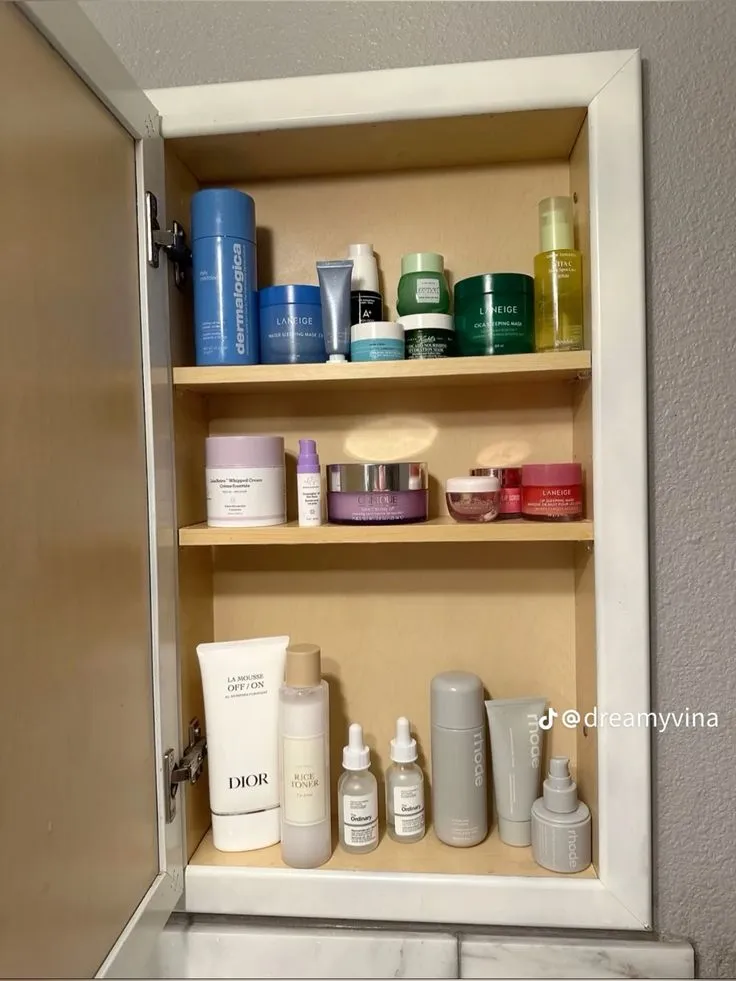
Photo: organized bathroom shelf skincare products minimal clean, via i.pinimg.com
Open your medicine cabinet right now. Go ahead — we'll wait. If you're like most Americans, you're looking at a crowded little shelf where a vitamin C serum leans against a bottle of ibuprofen, a tube of hydrocortisone is wedged behind a cleanser, and everything is lightly dusted with a film you can't quite identify.
That film is the problem. And so is everything else about the arrangement.
Why Skincare and Medicine Make Bad Neighbors
The medicine cabinet was never designed with skincare in mind. It sits above the sink, which means it catches every splash, every steam cloud, every burst of hot water from a morning shower. It's also where we reflexively stash anything that comes in a small box — which is how your retinol ends up wedged between an antihistamine and a half-used bottle of cough syrup from last February.
There are two real issues here. The first is environmental: temperature swings and humidity degrade active ingredients, and the cabinet door opens and closes all day, pumping in warm moist air each time. The second is cross-contamination. Cleaning sprays, hydrogen peroxide, and even some medications can leave residue on your hands, which transfers to your serum dropper, which goes straight into the formula. You paid good money for that formula.
And then there's the subtler problem: confusion. When everything lives together, it's easy to grab the wrong tube half-awake, or to forget that the sunscreen expired two seasons ago because it's hidden behind the floss.
The One-Evening Audit
You don't need a weekend or a label maker. You need about forty-five minutes and a flat surface. Here's the sequence:
Step 1: Take it all out. Every bottle, jar, tube, and box — out of the cabinet, off the counter, onto a towel on your bed or bathroom floor. Seeing the full inventory at once is half the battle.
Step 2: Sort into four piles. Skincare, medications, dental/hair tools, and the mystery pile (everything else). Be honest about the mystery pile. That hotel-size lotion from a 2019 trip to Phoenix? It's in the mystery pile.
Step 3: Check dates. Medications first — expired meds go in a sealed bag for proper disposal (many pharmacies take them). Then skincare. Look for the little open-jar symbol on packaging; a "12M" means twelve months after opening. When in doubt, sniff. If it smells off or the texture has changed, it goes.
Step 4: Separate the actives. Anything with retinoids, vitamin C, or exfoliating acids should not live in a steamy cabinet. Pull these out — they're relocating.
Step 5: Wipe everything down. Bottles pick up grime on their bases and caps. A quick pass with a damp cloth and a dry towel takes ten minutes and makes your whole setup feel new.
Where Things Should Actually Live
Here's the simple rule: skincare that's sensitive to light and heat goes somewhere cool, dark, and dry. Medications go somewhere you'll see them and remember them. Those are rarely the same place.
The bedroom shelf. A small tray or basket on a dresser or nightstand is the gold standard for actives. Bedroom temperatures stay stable, there's no shower steam, and applying your nighttime routine away from the bathroom mirror doubles as a wind-down ritual.
A dedicated drawer. If counter space is scarce, a drawer lined with a washable mat works well — just keep it away from the sink and stove.
The closet. For backstock and unopened products, a linen closet shelf is ideal. Cool and dark beats the cabinet every time.
Medications stay put. Ironically, the medicine cabinet is fine for most over-the-counter meds — they're more shelf-stable than your serum. Just group them together, labels facing out, and toss anything expired.
For Small Bathrooms (AKA Most American Bathrooms)
Renters and apartment dwellers: we see you. If your bathroom is the size of a phone booth and storage options are limited, a few workarounds help:
- A lidded storage box under the sink keeps steam and cleaning-product residue off your products. A $10 plastic bin does the job.
- A slim rolling cart tucks next to the vanity and can hold your whole routine, moved out of the splash zone.
- Suction or adhesive shower caddies placed on the far wall — away from the direct spray line — keep daily essentials handy without cabinet crowding.
- The one-in, one-out rule matters more than any storage hack. A smaller collection is the easiest storage solution of all.
Make It a Habit
Once you've done the full audit, maintenance takes five minutes a season. Check dates, wipe bottles, and ask whether anything migrated back into the steam zone. Your products will last longer, your formulas will work the way they were designed to, and — honestly — opening a clean, organized cabinet just feels better.
Your skincare does its best work when you treat it well. Step one is simply giving it a home that isn't sharing walls with your antihistamines.

