Hard Water, Harder Skin: The Invisible Reason Your Routine Keeps Disappointing You
You can spend a small fortune on a cleanser, a treatment, a moisturizer — the whole layered lineup — and still wake up wondering why nothing seems to land. Before you blame the formula, consider a quieter culprit: your tap.
Across much of the United States, the water running over your face every morning is loaded with dissolved minerals, mostly calcium and magnesium. It's perfectly safe to drink in most places. But for your skin? It's a different story.
What Hard Water Actually Does to Your Skin
The trouble starts with chemistry. Hard water reacts with the surfactants in your cleanser, leaving behind a film — sometimes called soap scum, sometimes called 'curd' — that clings to skin instead of rinsing away. That residue can clog pores, dull your complexion, and disrupt the lipid barrier that keeps moisture in and irritants out.
A compromised barrier shows up in ways you might not connect to water at all: tightness after cleansing, flaky patches, breakouts along the jaw, or products that suddenly sting. If your skin felt fine on vacation and miserable at home, that's a clue. So is moving — plenty of people report their skin 'changed' after relocating from, say, Portland to Phoenix. It usually didn't. The water did.
Chlorine deserves a mention too. Municipal supplies are disinfected with it (for good reason), but chlorine strips the natural oils your barrier relies on, especially with long, hot showers in winter.
The US Water Map: Why Your Zip Code Matters
Water hardness varies dramatically by region, and the pattern is fairly predictable:
- The Southwest and Midwest sit on top of the hardest water in the country. Las Vegas, Phoenix, San Antonio, and much of Texas and Kansas draw on mineral-rich groundwater and the Colorado River. If you've noticed white crust on your showerhead, your water is working overtime.
- Florida is a sneaky one — much of the peninsula has very hard water thanks to limestone aquifers.
- New England and the Pacific Northwest generally enjoy soft water, which is why a Boston winter can feel gentler on your face than a Phoenix summer.
- The Great Lakes region is a mixed bag; cities on Lake Michigan tend toward moderate hardness, while well-water suburbs can swing much harder.
The Two-Minute Home Water Test
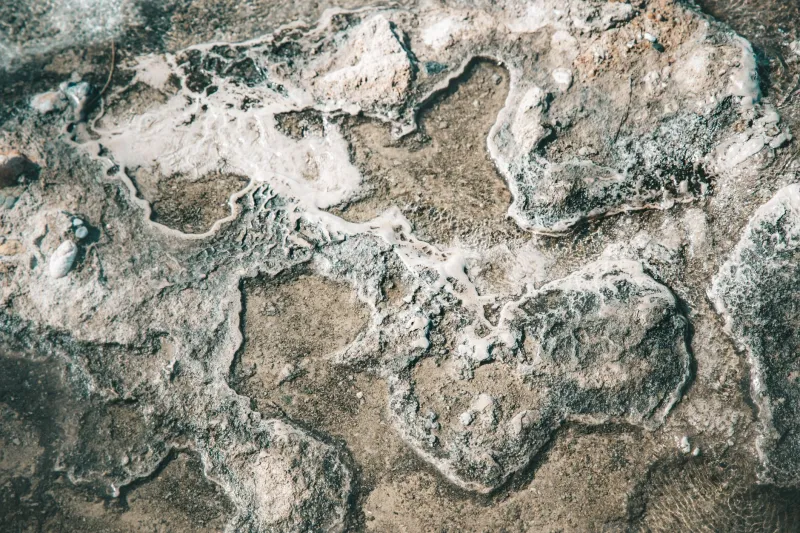
You don't need a lab. Start with the observation test: look at your shower door, your kettle, and your faucets. Chalky white buildup means hard water, full stop.
For something slightly more scientific, grab a clear bottle, fill it halfway with tap water, add about ten drops of pure castile soap, and shake vigorously. Soft water produces fluffy suds that linger. Hard water produces a flat, soapy film with barely any lather. Cheap test strips — available at any hardware store for around ten dollars — will give you a rough grain-per-gallon number if you want specifics.
Fixes That Are Worth It (and Ones That Aren't)
You don't need to replumb your house. A few targeted moves go a long way:
A showerhead filter. Look for one that addresses both chlorine and minerals. It won't fully soften very hard water, but it takes the edge off and typically costs less than a single serum.
A faucet filter for the bathroom sink. If you wash your face at the sink, this is where the money is best spent. Activated carbon filters handle chlorine; ion-exchange options tackle minerals.
Smarter cleansing habits. In hard water zones, a rinse-free micellar water as a final swipe after cleansing removes that mineral-soap residue. Some dermatologists also recommend a final rinse with distilled water — a spa trick that costs about a dollar a bottle.
Dial down the temperature. Hot water strips more oil and dissolves more mineral residue onto skin. Lukewarm isn't glamorous, but your barrier will notice the difference within a week.
Skip the whole-house softener — for now. These systems genuinely work, but at $1,000 to $3,000 installed, start small and see if targeted fixes resolve the issue first.
Adjust Your Routine to Your Water
Once your water situation is handled, your products can finally do their jobs. If you're still in a hard water zone, lean on richer moisturizers with ceramides and fatty acids to shore up the barrier, and consider a gentle acidic toner a few times a week to dissolve any lingering mineral residue.
Clean skincare, thoughtfully made simple — sometimes that means looking past the bottle entirely. Your products may be exactly right. Your water just needs to get out of their way.